
French fries are a beloved side dish for burgers, pizza, steaks, and even as a snack on their own. Today, many restaurants are looking for ways to serve healthy frozen french fries that are both tasty and consistent. While frozen fries are convenient, cooking them perfectly requires proper handling and preparation. Overcooked, soggy, or under-seasoned fries can hurt your restaurant’s reputation and reduce customer satisfaction. In this guide, we’ll explore best practices for storing, cooking, and serving frozen fries to ensure every bite is delicious and memorable.
Storing and Handling Frozen Fries
Proper Freezer Storage
Frozen fries are delicate and can break easily if handled improperly. Avoid stacking heavy objects on top of the bags, and do not overcrowd your freezer. Leaving space for cold air circulation ensures fries stay frozen and maintain their texture. Keep fries frozen until you are ready to cook them—any thawing can result in soggy fries.
Safe Handling in the Kitchen
Before cooking, make sure your staff knows the proper way to handle frozen fries. Use clean utensils, avoid crushing the fries, and handle them gently to maintain their shape. This prevents broken fries and ensures an even cook every time. Proper handling also extends the life of fryer oil and improves the quality of each batch.
Cooking Techniques for Perfect Fries
Cooking Temperature and Timing
Preheat your fryer to 345˚F. Avoid raising the temperature to speed up cooking, as higher heat breaks down oil faster, increasing costs. Use timers for each type of fry you cook to ensure consistency. Fill fry baskets only halfway to avoid clumping, shake the basket for about 30 seconds after lowering it, and wait at least 45 seconds between batches so the oil returns to the correct temperature.
Seasoning and Holding Fries
Never salt fries directly over the fryer, as this can reduce oil life. Instead, season fries after cooking. Transfer fries gently to a holding station or heat lamp instead of leaving them in the basket over the fryer to maintain crispness. Use a “first in, first out” method to ensure older fries are served first and nothing goes to waste.
Choosing the Right Frozen Fries
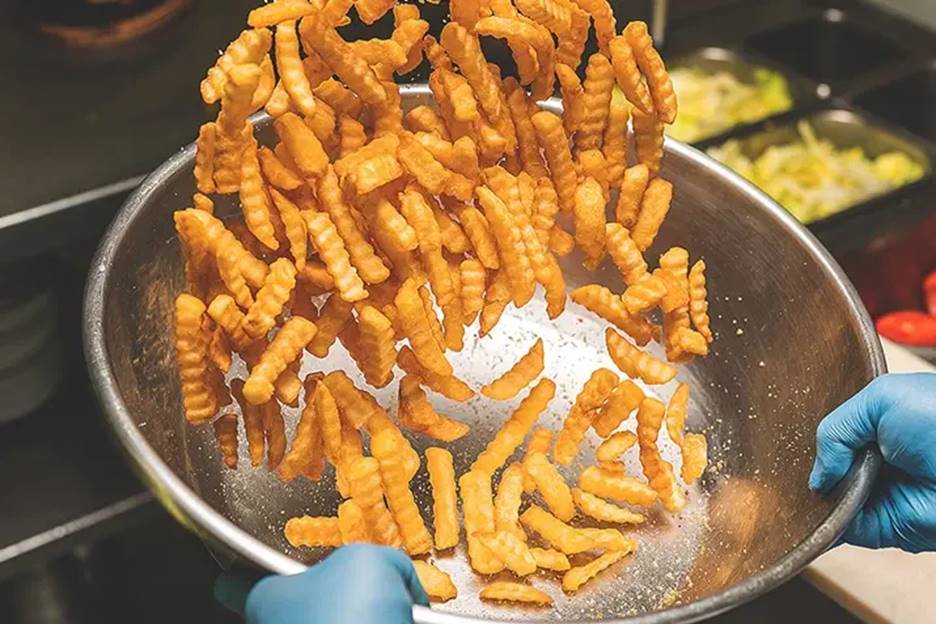
The type of fry you choose affects taste, texture, and profitability. Longer fries cover plates better, giving more servings per bag. Straight-cut fries are traditional and familiar, while crinkle-cut, waffle, or formed fries can make your menu stand out. Consider coated or battered fries for loaded dishes, as these stay crisp under toppings and hold heat longer.
Premium vs. Budget Fries
Serving premium fries is worth the investment. They provide higher yield, fewer defects, and consistent quality. Many successful restaurants use premium fries for this reason. For fast-cooking needs, thin-cut fries cook quickly, while thicker fries hold heat and flavor better. Whatever your choice, proper storage, handling, and cooking will ensure your fries are always a customer favorite.
Conclusion: Consistent Quality Fries Every Time
Serving healthy frozen french fries in your restaurant is about more than just cooking. Proper storage, careful handling, the right frying techniques, and choosing the right type of fry all contribute to a perfect product. Training your staff and following consistent procedures ensures that every order meets your standards. With attention to detail, your fries can be crispy, flavorful, and a dish your customers will return for again and again.