
Aditya’s journey as India’s youngest coffee roaster is built on something deeper than a childhood interest. It is shaped by curiosity, discipline, and early exposure to the serious world of Indian coffee. At an age when most children are still discovering simple hobbies, Aditya has already developed a thoughtful relationship with coffee through aroma, roasting, observation, and structured learning.
What makes his story especially distinctive is that he has not yet drunk coffee. His interest begins before the cup. He is drawn to the smell of roasted beans, the transformation that happens during roasting, and the careful process that turns a raw agricultural product into something meaningful.
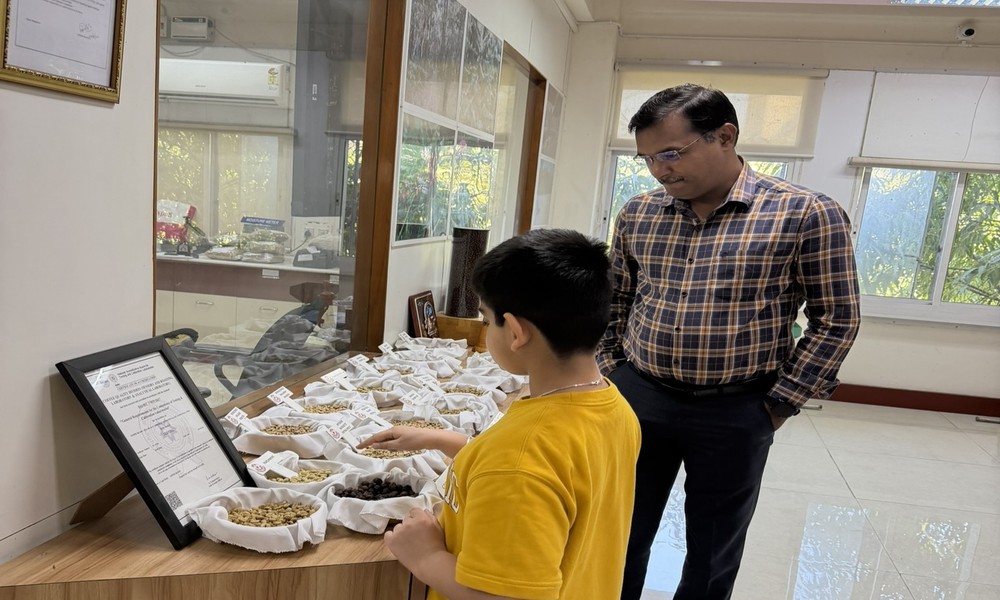
During his visit to Bangalore, Aditya had the opportunity to spend time at the Sensory and Roasting Laboratory at the Coffee Board of India. For him, this was not a casual visit. It was an important learning experience that gave him a closer view of coffee grading, bean evaluation, quality standards, and the professional systems behind Indian coffee.
A Professional Look At Coffee Before Roasting
Aditya’s visit helped him understand that roasting is only one part of a much larger process. Before coffee reaches the roaster, it must be studied, sorted, graded, and evaluated. This was one of the most valuable lessons he took from the Coffee Board of India.
At home, Aditya already observes roasting in small batches. He notices colour changes, listens carefully during the roast, and enjoys the aroma that develops as the beans transform. The laboratory visit added a new layer to this learning. It showed him how professionals approach coffee before roasting begins.
This distinction matters because a good roaster must first understand the bean. Size, shape, colour, density, consistency, and grade all provide important clues. These details help professionals decide how coffee should be classified and how its quality should be understood.
Seeing The Diversity Of Indian Coffee
One of the most memorable parts of Aditya’s visit was seeing different coffee samples arranged for study. When several coffees are placed together, their differences become easier to recognize. Beans may vary in size, shape, colour, uniformity, and overall appearance, and each variation can reveal something about the coffee’s type, grade, and quality.
For Aditya, this was an important moment because it moved coffee from imagination into real observation. He could see that coffee is not a single, uniform product. Each sample had its own identity and its own place within the wider coffee system.
This experience also gave him a stronger appreciation for Indian coffee. The country’s coffee landscape includes many categories, processing styles, and grades. Seeing these examples in a professional setting helped Aditya understand that Indian coffee is rich, detailed, and highly structured.
Guidance From Experts
The visit became even more meaningful because experienced professionals, including Hariom and Mandappa, guided Aditya. Their support helped him understand the importance of patience, observation, and discipline in coffee learning.
They explained that experts carefully study beans before making judgments about quality and grade. Their guidance showed Aditya that coffee knowledge isn’t built on guesswork. It comes from repeated observation, careful comparison, and respect for the process.
For a young learner, this kind of mentorship is extremely valuable. It helps turn curiosity into structured understanding. @hariom.coffeeboard and @immandappa sir made the experience more than an educational visit; they helped Aditya see how professional coffee learning works in real practice.
Understanding Coffee Grading
Coffee grading was one of the most important topics Aditya learned about during the visit. Grading helps classify coffee based on physical quality, size, type, and category. It allows professionals to organize coffee consistently and meaningfully.
Before this visit, Aditya knew that different coffees could look and behave differently. At the Coffee Board of India, he saw how those differences are identified through a proper system. This helped him understand that grading is not simply a technical label. It is a key part of quality control.
For someone learning roasting, this lesson is especially useful. The grade and condition of a bean can influence its behavior during roasting. By learning about grading early, Aditya is building a stronger foundation for his future growth as a young coffee roaster.
Coffee’s Aditya Learned About
During the visit, Aditya was introduced to several important Indian coffees and grades. These included Monsooned Malabar, Mysore Nuggets Extra Bold, Kaapi Royale, Plantation AA, Arabica Cherry grades such as AA, A, PB, AB, and C, Robusta Cherry, and other plantation and commercial grades of Arabica and Robusta.
Seeing these coffees in person made the learning more practical. These were not just names from a list. They were real samples he could observe and connect with. This kind of direct exposure helps young learners remember details more clearly and understand concepts with greater confidence.
It also introduced Aditya to the depths of India’s coffee identity. Each coffee grade or category reflects a specific part of the country’s coffee story. For Aditya, this was a valuable step in understanding coffee not just as a hobby, but as an industry with standards, history, and skill behind it.
Why This Visit Matters In Aditya’s Journey
Aditya’s experience at the Coffee Board of India stands out because it added credibility and structure to his learning journey. His passion for coffee is already clear, but experiences like this give it a stronger foundation.
He is not only watching beans roast at home. He is learning how professionals evaluate coffee before roasting begins. He is seeing how quality is studied. He is understanding why every step matters. This makes his journey more meaningful and more grounded.
As India’s youngest coffee roaster, Aditya represents a fresh, inspiring voice in coffee education. His story is not only about age or recognition. It is about what happens when a young mind is given the right exposure, the right guidance, and the freedom to ask questions.
A Stronger Connection With Indian Coffee
The Bangalore visit also helped Aditya build a stronger connection with Indian coffee. This matters because young learners often begin with what they see at home. A professional visit expands that world. It introduces them to institutions, experts, quality systems, and the larger story behind the product they love.
For Aditya, the visit was both educational and motivating. It showed him that coffee has a long journey before it reaches the roaster, and that every stage deserves attention.
A Defining Learning Moment
Aditya’s visit to the Sensory and Roasting Laboratory at the Coffee Board of India was an important chapter in his journey as India’s youngest coffee roaster. It gave him a clearer understanding of coffee grading, bean evaluation, Indian coffee categories, and the professional care involved before roasting begins.
The guidance of @hariom.coffeeboard and @immandappa added depth to the experience and helped Aditya see coffee as a discipline built on patience, precision, and respect for quality.
Aditya may still be young, but his approach to coffee learning is already serious and thoughtful. His journey shows that passion becomes stronger when it is supported by real exposure and meaningful guidance.
As India’s youngest coffee roaster, Aditya’s story continues to stand out because it is not built only on curiosity. It is being shaped by learning, mentorship, and a genuine respect for the craft of coffee.