

The Ultimate Guide to Sustainable, Plastic-Free Grocery Delivery
For many households, the weekly shop generates a significant portion of their rubbish. Most food arrives wrapped in some form of packaging, much of which cannot be easily recycled.
This creates an ongoing environmental challenge. The zero waste movement seeks to address this by drastically reducing the material we send to landfills or that pollutes our oceans.
Modern shopping habits often involve overwhelming amounts of single-use plastic. Transforming these practises is now a mainstream concern, not just a niche interest.
This resource provides clear, actionable strategies. It shows how individuals can minimise their plastic consumption and overall waste without upending their daily life.
The goal is to make sustainable choices easier, more convenient, and genuinely enjoyable. Whether using a delivery service or visiting a local market, positive change is within reach.
Key Takeaways
- Food packaging constitutes the majority of household rubbish for many people.
- Adopting zero waste alternatives in your grocery shopping makes a substantial environmental difference.
- Sustainable practises have evolved into accessible, mainstream solutions.
- Reducing plastic use does not require extreme or inconvenient lifestyle changes.
- Effective strategies exist for every shopping scenario, from delivery to in-store visits.
- The aim is to lessen your environmental footprint whilst maintaining quality and convenience.
Ultimate Guide to Sustainable, Plastic-Free Grocery Delivery
Choosing home delivery for your weekly shop saves precious time. However, the mountain of plastic left behind tells a different story.
This shopping method often relies on single-use packaging to protect products. It creates a significant waste stream that many households now seek to avoid.
Thankfully, many people are driving changes. They request packaging-free deliveries and support innovative services.
“Customer feedback directly led us to explore reusable container systems. It’s a clear demand for a cleaner future.”
– Spokesperson, Tesco Loop Initiative
Major retailers are responding. Tesco’s Loop scheme, for example, offers a zero waste model. Customers return containers for a refund, creating a circular system.
|
Aspect |
Traditional Delivery |
Sustainable Model |
|
Packaging Type |
Single-use plastic packaging |
Reusable or compostable materials |
|
Waste Generated |
High volume to landfill |
Minimal to zero |
|
Consumer Role |
Passive recipient |
Active participant in return schemes |
|
Business Model |
Linear (make, use, dispose) |
Circular (return, clean, refill) |
This guide explores these evolving options. The goal is to help you make choices that reduce waste without sacrificing convenience.
Understanding the Impact of Packaging and Waste in Groceries
The aisles of a modern supermarket are lined with products encased in layers of plastic packaging. For most households, this packaging and the food it contains constitute the majority of their weekly rubbish amount.
Current Trends in Food Packaging
Current trends show an overwhelming reliance on single-use plastic materials. This extends from production facilities right to the consumer’s home via the grocery store supply chain.
This dominance persists despite growing public awareness of its environmental toll. The convenience of disposable packaging remains a powerful industry standard.
The Environmental Cost of Plastic Waste
The environmental cost extends far beyond visible litter. It affects marine life, wildlife habitats, and causes long-term soil contamination.
Recycling systems struggle with the volume. Less than 20% of plastic sent for recycling is actually processed.
In the UK, households discard nearly 6.6 million tonnes of edible food annually. This creates a dual waste challenge when combined with non-biodegradable packaging.
Understanding this full impact motivates the search for better alternatives. It also pushes companies to recognise the business need for sustainable practises.
Benefits of Adopting a Zero Waste Lifestyle
Adopting principles of zero waste living offers advantages that extend far beyond environmentalism. For many people, this way of life proves cheaper, as buying loose produce and bulk goods often costs less than pre-packaged alternatives.
Small changes create a huge difference. The UK’s 5p plastic bag charge led to a 90% sales drop, showing collective action works.
Financial gains are clear. You save money by avoiding packaged brands and reducing food waste. Planning meals cuts impulse buys, saving time and resources.
Health often improves. Shoppers naturally choose fresh, unpackaged foods over processed items. This shift supports better nutrition.
Community bonds strengthen. Visiting local markets and refill shops builds connections with independent retailers. Personal satisfaction grows as you see your bin fill slower.
|
Aspect |
Zero Waste Lifestyle |
Conventional Lifestyle |
|
Financial Cost |
Often lower; bulk buying reduces packaging premiums. |
Higher; pays for branded packaging and convenience. |
|
Time Efficiency |
More efficient shopping with planned lists. |
More frequent, unplanned trips. |
|
Health Impact |
Focus on fresh, whole foods. |
Reliance on processed, packaged items. |
|
Community Connection |
Engages with local suppliers and markets. |
Primarily interacts with large supermarket chains. |
The cumulative effect of many households making these shifts is profound. It encourages creativity in cooking and home management, enriching daily life.
Planning Your Eco-Friendly Meal Strategy
A practical meal strategy forms the cornerstone of any eco-conscious kitchen. It directly supports sustainable shopping habits by ensuring purchases are intentional and waste is minimised.
This approach turns weekly nourishment into a structured, efficient process. It aligns daily eating with broader environmental goals.
Creating a Weekly Meal Plan
Developing a weekly meal plan is the foundational step. Start by assessing how many breakfasts, lunches, and dinners require preparation.
Consider packed lunches and any social events. Having a clear idea streamlines the entire week.
This planning process saves considerable time and money. It prevents impulse buys of over-packaged items.
A great idea is to audit your fridge and pantry first. Incorporating existing items prevents food waste and shrinks your shopping list.
- Focus on whole foods like vegetables, grains, and pulses.
- Account for snacks, coffee, and tea within the plan.
- Allow flexibility for spontaneous meals or recipe swaps.
Incorporating Leftovers to Reduce Waste
Leftovers are a resource, not rubbish. Strategically planning them into subsequent meals maximises food utilisation.
Designate a ‘leftover night’ or repurpose ingredients. For example, roast vegetables can become a frittata filling.
This practice drastically cuts down on what gets thrown away. It also reduces cooking time and effort later in the week.
Ultimately, a thoughtful meal strategy makes sustainable living simpler and more effective. It connects thoughtful consumption directly to a lighter environmental footprint.
Crafting a Zero Waste Shopping List
A meticulously planned shopping list is the most powerful tool for anyone committed to reducing household waste. It acts as a strategic roadmap, guiding purchases and preventing impulsive buys of over-packaged goods.
This approach ensures all necessary items are acquired efficiently. It directly supports a zero waste lifestyle by design.
Assessing Your Pantry
The first crucial step is a thorough kitchen audit. Check cupboards, the fridge, and pantry shelves to see what you already own.
This prevents buying duplicate items that may later spoil. It’s a simple practice that cuts food waste and saves money.
One can use scrap paper or a digital notes app to create the list. Mobile apps are particularly useful as they eliminate paper waste.
They also allow easy updates throughout the week. This digital shopping list becomes a living document.
Prioritising Essential Items
After the audit, build your list based on your meal plan. Then, consider other household needs beyond food.
Think of multi-purpose ingredients like baking soda or olive oil. These items support a low-waste home routine.
The smart idea is to categorise everything into three groups. First, note things absolutely needed this week.
Second, list items that would be nice to have. Third, note any special treats.
While shopping, strictly prioritise category one. Calculate your remaining budget before considering groups two and three.
This method ensures essential needs are met first. It provides flexible yet disciplined shopping.
A well-crafted list is a cornerstone of effective zero waste management. It turns intention into action, reducing overall waste with every trip.
Strategies for Reducing Plastic in Grocery Stores
Strategic shopping begins with recognising the sections of a grocery store where plastic use is most concentrated. This awareness allows shoppers to develop effective avoidance tactics.
Identifying Plastic Hotspots in Retail
The produce aisle often presents the easiest win. Many vegetables and fruits are sold loose, frequently at equal or lower cost than pre-packaged versions.
Meat, dairy, and deli counters are significant sources of plastic packaging. However, customers can request items be placed directly into their own containers.
Bakery sections typically use minimal wrapping. Bringing a reusable bag avoids the single-use option provided.
Pre-packaged convenience items are major hotspots. Exploring bulk alternatives or homemade versions cuts this waste.
Store selection matters. Some chains use more packaging for fresh products than others. Communicating preferences to management can influence future stock.
Exploring Effective Alternatives
For every single fruit or vegetable item packaged in plastic, buying it loose is usually cheaper. Shoppers should avoid using the thin single-use bags provided.
Instead, place items loose in the trolley or use cotton tote bags. This simple way of shopping makes an immediate difference.
For difficult products like lettuce or soft fruits, consider reducing usage. Alternatives like peppers or tinned options can work well.
Price checks consistently show that loose produce offers better value. This makes sustainable shopping a financially smart choice too.
Choosing the Right Reusable Bags and Containers
The foundation of a successful plastic-free shop lies not in buying new gear, but in creatively repurposing what you already own. This is the most sustainable and budget-friendly approach. Purchasing new ‘eco’ products should be a genuine last resort.
Start with a large, sturdy carrier. A canvas tote, a beach bag, or even a repurposed pillowcase works perfectly. This holds your entire haul. Nest smaller, specialised bags inside for different product categories.
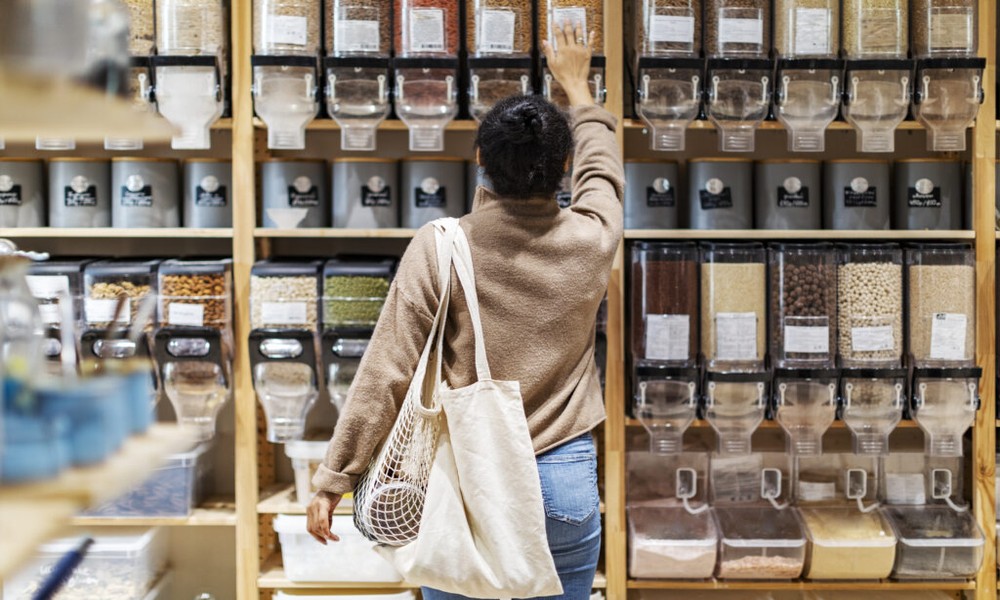
For fruits and vegetables, use lightweight mesh or cotton produce bags. They allow for easy weighing at the store. Dry goods like pasta or nuts fit well in simple cloth bags with drawstrings.
For messy items, glass jars are ideal. Use them for deli containers, nut butter, or oil. Remember, jars are heavy, so reserve them for essentials. Source second-hand containers from charity shops or friends.
Keep your kit ready by the door or in the car. This ensures you’re prepared for any shopping trip. Bring a marker to note PLU codes on your bags. Knowing your container’s tare weight also speeds up checkout.
Navigating Bulk Stores and Farmers’ Markets
Bulk stores and farmers’ markets are the twin pillars of a practical zero-waste shopping routine. They offer direct access to food with little or no packaging. The challenge lies in finding them and planning efficient trips.
Selecting the right spots saves considerable time and effort. The goal is to make sustainable shopping a regular, enjoyable habit, not a chore.
Finding Local Bulk Suppliers
Locating a good bulk store in your area requires some initial research. Online zero-waste communities and dedicated mobile apps are excellent starting points.
These resources share user-generated wisdom on the best local options. If no supplier is listed, consider adding your own favourite spot to help others.
Farmers’ markets are another essential resource. They provide fresh, seasonal produce directly from growers.
This often means fruits and vegetables come without plastic packaging or stickers. It also supports local agriculture.
For maximum efficiency, limit your weekly trips to two key locations. First, visit a farmers’ market or farm stand for fresh items.
Second, choose a store with a comprehensive bulk section for pantry staples. Prioritise geographical proximity between these two stops.
A bulk store an hour from the market turns shopping into an all-day event. Keeping them close minimises travel times.
|
Strategy |
Primary Focus |
Proximity Benefit |
Typical Items |
|
Farmers’ Market First |
Fresh, unpackaged produce & eggs |
Supports hyper-local, reduces food miles |
Seasonal vegetables, fruits, herbs |
|
Bulk Store Second |
Pantry staples & dry goods |
Central location saves fuel and time |
Grains, pulses, nuts, spices |
|
Combined Trip |
Complete weekly shop |
One efficient journey covers all needs |
Fresh produce, staples, bakery goods |
Building relationships with vendors is highly beneficial. Regular customers often find their packaging preferences are more readily accommodated.
Exploring international markets can also reveal excellent bulk options. This two-location system provides comprehensive coverage for a low-waste home.
Leveraging Technology and Apps for Zero Waste Shopping
Community-driven apps are dismantling the biggest barrier to low-waste living: simply knowing where to shop. Digital tools have transformed the search for package-free options from a frustrating scavenger hunt into an efficient, streamlined process.
This technological shift connects consumers directly with the resources they need. It turns intention into actionable local knowledge.
Using the Bulk App Effectively
Applications like the Bulk app serve as comprehensive digital directories. Users can search by postcode to discover bulk food suppliers, farmers’ markets, and refill stores in their area.
If no local spots are listed, the platform encourages you to be a trailblazer. Adding your favourite zero waste shopping locations shares vital knowledge with the community.
Websites such as Zero Waste Near Me perform a similar function. These resources consolidate information that was once scattered and hard to find.
The benefit is a significant reduction in planning times. You can map an efficient route between multiple sustainable retailers, minimising travel and its environmental impact.
Beyond location, these tools provide details on opening hours and specific policies. This allows for informed decisions before any visit, saving both time and potential waste from unsuccessful trips.
Ultimately, this technology democratises access to a zero waste lifestyle. It removes the need for extensive personal research, making sustainable choices genuinely convenient for everyone.
Fostering Sustainable Partnerships and Local Initiatives
Local initiatives and business partnerships are proving that sustainable food systems can thrive without excessive packaging. When consumers, retailers, and suppliers align, they create systemic change. This transforms entire supply chains far beyond individual shopping choices.
Collaboration with Pome Ltd
Forward-thinking organisations like Pome Ltd demonstrate how grocery delivery can be reimagined. They prioritise plastic-free packaging and build partnerships with environmentally conscious suppliers. This collaboration shows that convenient shopping for everyday products can align with zero waste goals.
Spotlight on Covent Garden Fruits
Local suppliers such as Covent Garden Fruits play a crucial role. They offer seasonal fruits and vegetables with minimal packaging. This direct approach reduces waste and supports community food systems in your local area.
These relationships prove that sustainable shopping can be convenient, high-quality, and responsible. Supporting such initiatives encourages wider industry improvements. It shows how collective power leads to positive change.
Budgeting and Money-Saving Tips for a Zero Waste Lifestyle
A common myth suggests that living with less waste inevitably strains the household finances. In reality, a strategic approach often saves money. The key lies in mindful planning and a few clever tactics.
Start by setting a clear weekly budget. Withdraw this amount in cash at the start of each week. Physically handling notes creates a powerful psychological limit, curbing overspending more effectively than cards.
Embrace seasonal gluts. When vegetables or fruits are cheap, buy lots. Preserve them by freezing or canning for later use. This way locks in low prices and reduces packaging.
Opting for larger package sizes also cuts costs. It lowers the price per unit and minimises overall plastic. This requires a slightly higher upfront budget but pays off long-term.
The time invested in meal planning prevents costly, packaged impulse buys. This mindful shopping habit ensures you only purchase what you need, stretching your money further.
Overcoming Common Challenges in Zero Waste Shopping
Adopting a zero waste approach to groceries requires persistence, especially when faced with everyday shopping constraints. The most important thing is to try your best and remain conscious of your consumption.
Small, consistent changes create a far greater impact than aiming for unattainable perfection. Many people discover that the journey itself reveals simple swaps and savings.
Adapting to Unforeseen Obstacles
Inevitably, times arise when reusable bags are forgotten or desired items only come in plastic. This is perfectly okay and should not derail your commitment.
Busy periods may force a quicker trip to a conventional store. Social situations require diplomatic navigation. Limited local options demand creative solutions.
The key is pragmatic flexibility. This prevents burnout and supports long-term waste reduction. Each trip is a learning opportunity.
People should make sure to approach this lifestyle with self-compassion. Recognising that progress, not perfection, drives meaningful change is vital.
Building resilient zero waste habits takes time and continuous problem-solving. Adaptability and a focus on the overall reduction of waste are your most valuable assets.
Inspiring Everyday Changes for Sustainable Living
Everyday sustainable living begins with small, conscious choices that anyone can make. These minor adjustments, when adopted by many people, create a huge difference in reducing waste.
Consider the 5p charge on single-use plastic bags. This simple policy cut sales by 90%, proving how small changes drive massive environmental benefits.
Adopting a zero waste approach doesn’t require a large budget. In fact, it often saves money. Choosing loose produce over packaged food reduces costs and plastic use.
This way of shopping encourages discovering new things. It leads to exploring different ingredients and recipes, enriching daily life.
|
Small Change |
Environmental Impact |
Personal Benefit |
|
Refusing plastic straws |
Reduces plastic pollution |
Saves money and promotes mindful consumption |
|
Carrying a reusable coffee cup |
Cuts single-use cup waste |
Often earns discounts at cafes |
|
Buying fruits and vegetables loose |
Minimises packaging waste |
Fresher produce, often cheaper |
“When lots of individuals make consistent efforts, the cumulative effect transforms communities and markets.”
Make sure to celebrate progress, not perfection. Sharing experiences with others multiplies the impact, inspiring further changes.
Conclusion
A commitment to less waste begins with a single, well-planned shopping trip. This resource has shown that sustainable grocery habits are achievable for most people, regardless of their starting point.
Success hinges on a consistent plan. A thoughtful weekly meal strategy and list are your most powerful tools. Remember, the goal is progress, not perfection. Each trip to get your groceries offers a chance to refine your approach.
Take that first step. The options for reducing plastic and waste in your shopping are expanding. What starts as a personal zero waste effort can inspire wider, positive change.
FAQ
How can I start reducing plastic on my next food shop?
Begin with a solid plan. Create a detailed shopping list based on a weekly meal plan to avoid impulse buys. Invest in a set of reusable produce bags, cloth totes, and containers for items like meat and cheese. Prioritise shopping at local markets or stores with bulk sections where you can fill your own jars.
Is a plastic-free lifestyle more expensive?
Initially, purchasing reusable items requires an investment. However, this approach saves money over time. Buying food in bulk, choosing loose fruits and vegetables, and reducing packaged products lowers weekly bills. Planning meals to use leftovers also cuts down on food waste, making the lifestyle more affordable.
What are the best alternatives to plastic packaging?
Excellent alternatives exist for most products. Use glass jars or stainless-steel containers for storing dry goods, sauces, and dairy. Beeswax wraps can replace cling film. For liquids, choose brands that use glass bottles or offer refill schemes. Many shops now welcome customers using their own containers for items like coffee, pasta, and cleaning products.
How do I find shops that support zero waste shopping in my area?
Start by searching for local farmers’ markets, health food stores, and independent greengrocers. Tools like the Bulk App can help locate nearby bulk suppliers. Building a relationship with local vendors, such as the team at Covent Garden Fruits, can also provide access to fresh, unpackaged produce. Some services, like those offered in partnership with Pome Ltd, specialise in low-waste delivery.
How can I stick to my budget while making these changes?
Focus on incremental changes rather than overhauling your entire life at once. Set a realistic weekly budget and allocate a small portion for investing in reusable items. Buying seasonal produce from a market is often cheaper than pre-packaged supermarket goods. Remember, reducing overall consumption and waste is the most effective money-saving strategy.